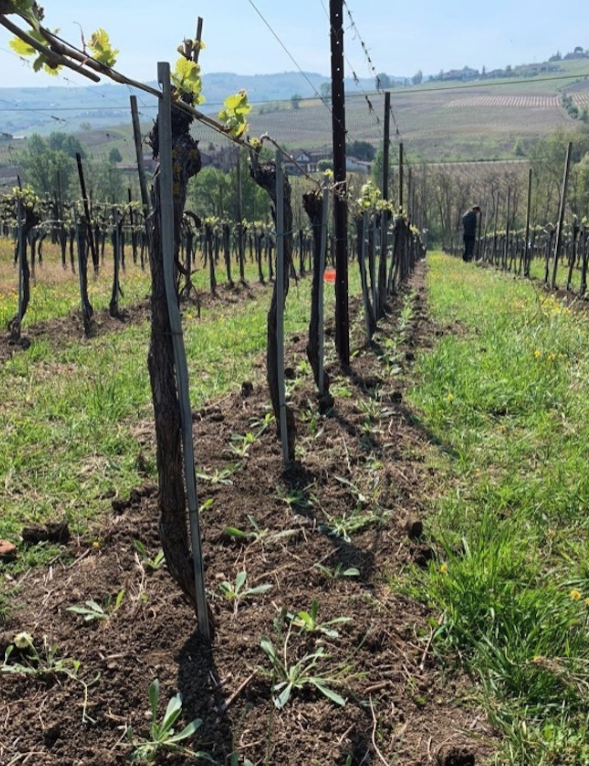
Explanation
Under-row permanent living mulch offers multiple benefits, including reduced tillage requirements and associated cost savings for under-row management, while still ensuring effective weed control.
Advantages
Provides effective long-term weed control in the under-row area.
Delivers benefits such as reduced tillage, lower herbicide use, and cost savings for under-row management over time.
Ensures consistent soil cover throughout the year, reducing the need for frequent interventions and simplifying under-row management.
Contributes to the reduction of greenhouse gas emissions associated with mechanical weeding, helps prevent soil erosion, and supports organic matter conservation.
Technical Aspects
Technical readiness
The development of machinery capable of preparing the seedbed, seeding, and covering seeds—combined with the selection of appropriate species for specific pedoclimatic conditions—will ensure optimal establishment and growth of under-row permanent living mulch.
Ease and efficiency of implementation
Implementation presents several challenges, including the need for specialized equipment to perform seedbed preparation, sowing, and seed coverage in the under-row area. While small-scale farms may manage these operations manually, mechanical tools are essential for scalability. Additional challenges include heavy soils, high autumn precipitation, risk of fungal disease, and potential competition with vines. Adaptive agronomic strategies are needed, including the selection of less competitive species or mixtures to reduce vine competition.
Need for training and education
Training programs, scalability studies, and demonstration activities are essential, particularly for the initial establishment of the permanent under-row cover crop.
Need for investments
Investments are required to purchase appropriate equipment, such as a combined machine equipped with a seeder for under-row sowing and tools for proper seedbed preparation and seed coverage.
Policy Recommendations
Subsidies should support under-row weed control by co-funding machinery investments and fostering the development of suitable equipment through targeted research programs. Policy efforts should also encourage farmer cooperation and the sharing of equipment and resources.
Additionally, funding should support localized research on species and variety selection suited to specific conditions. Training programs -including demonstration events and educational initiatives- should be promoted to strengthen farmers' knowledge, supported by stronger links between practitioners and research institutions.