Description
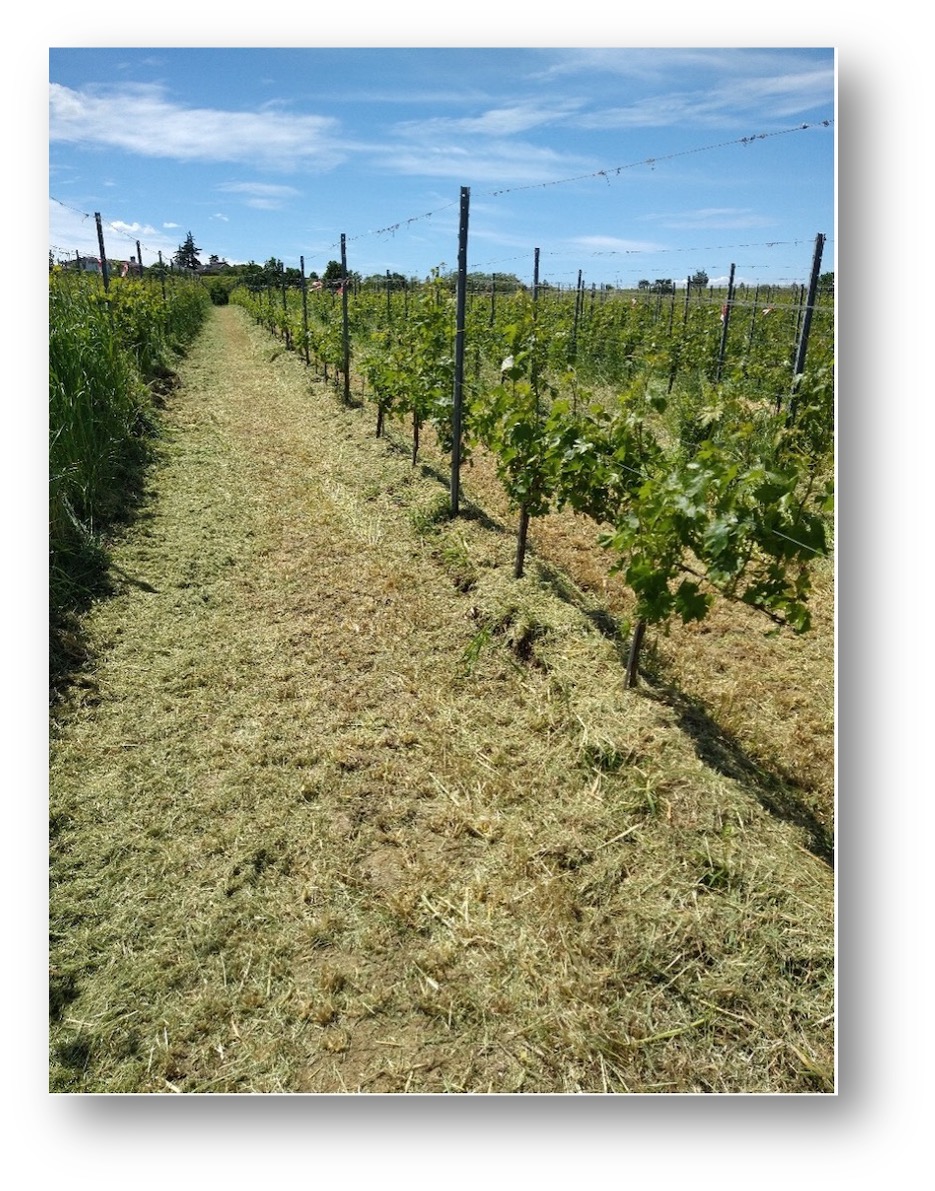
This practice involves creating a dead mulch in the inter-row space and shifting it to the under-row area using a windrow-maker for mulched stubble.
Explanation
It provides immediate benefits, including organic matter conservation, improved water retention, and reduced costs associated with mechanical weed control.
Advantages
High efficiency is achieved when the cover crop produces a substantial amount of biomass, effectively suppressing weeds.
Reduces seasonal costs associated with mechanical weed control by minimizing the number of required passes.
Helps lower greenhouse gas emissions linked to mechanical weed control. It also contributes to soil, organic matter, and water conservation.
Drawbacks
Efficiency is low if spontaneous or sown cover crops grow slowly or produce insufficient biomass to form a functional dead mulch under the rows. Additionally, harsh wind or heavy rain events can disrupt mulch placement and reduce its effectiveness.
In areas with high pest pressure, mulch material can promote the spread of certain diseases.
Technical Aspects
Technical readiness
The required machinery is available on the market, and the technique is scalable at the farm level in the short term. However, it is important to consider local pedoclimatic conditions - such as wind exposure and soils with high stone content - which may affect its effectiveness.
Ease and efficiency of implementation
In areas where spontaneous or sown cover crops grow slowly or produce limited biomass, forming an effective dead mulch under the rows may be difficult. Harsh wind or heavy rain events can also compromise mulch stability. In regions with high pest pressure, the use of mulched pruning materials may increase the risk of disease spread, necessitating careful management strategies.
Need for training and education
It is important to promote awareness and understanding of this innovative machinery and its proper use. Demonstrative activities should be organized to ensure farmers can apply the technique effectively in various contexts.
Need for investments
To adopt this technique, it is necessary to purchase a windrow-maker designed for managing mulched stubble.
Policy Recommendations
Subsidies are needed to offset reduced income during transition phases or to support the purchase of specialized machinery. Financial assistance should also be directed toward training programs to ensure proper implementation of the practice at the farm level. Additionally, on-farm demonstrative activities should be funded to facilitate knowledge transfer, increase awareness, and encourage adoption among farmers.
Economic Analysis
A major category of benefits lies in the reduction of recurring operational costs, which significantly contributes to the economic viability of shifting to mechanical weeding. One of the primary advantages is the decrease in fuel expenses, driven by the increased efficiency of the mulcher, which enables quicker operations. Another key benefit is the reduction in labor costs, directly linked to the mulcher’s faster processing time compared to the previous herbicide-only method, thus requiring less labor input.
Social Analysis
The global score indicates a moderate social impact from the adoption of cover crop practices, with a traffic light score of 72.32%. Although this falls within the "high impact" category, it is on the lower end of that range, suggesting that social benefits are present but not exceptionally strong. Notable advantages include improvements in farmer education, skill development, and job creation. However, lower performance in areas such as gender inclusivity and conditions for vulnerable groups points to the need for further efforts to improve equity and inclusiveness in these practices.
Social Analysis Percentage
72.32
Social Analysis Color
green
Environmental Analysis
The global score of 68.4% indicates a strong overall environmental impact, placing it firmly within the high-impact category. While this score reflects substantial perceived environmental benefits - especially in reducing soil erosion and limiting the need for external inputs,it remains moderate in certain dimensions. For example, biodiversity enhancement is perceived as less significant, suggesting that while the environmental improvements are meaningful, they are not uniformly strong across all indicators.
Environmental Analysis Percentage
68.40
Environmental Analysis Color
green