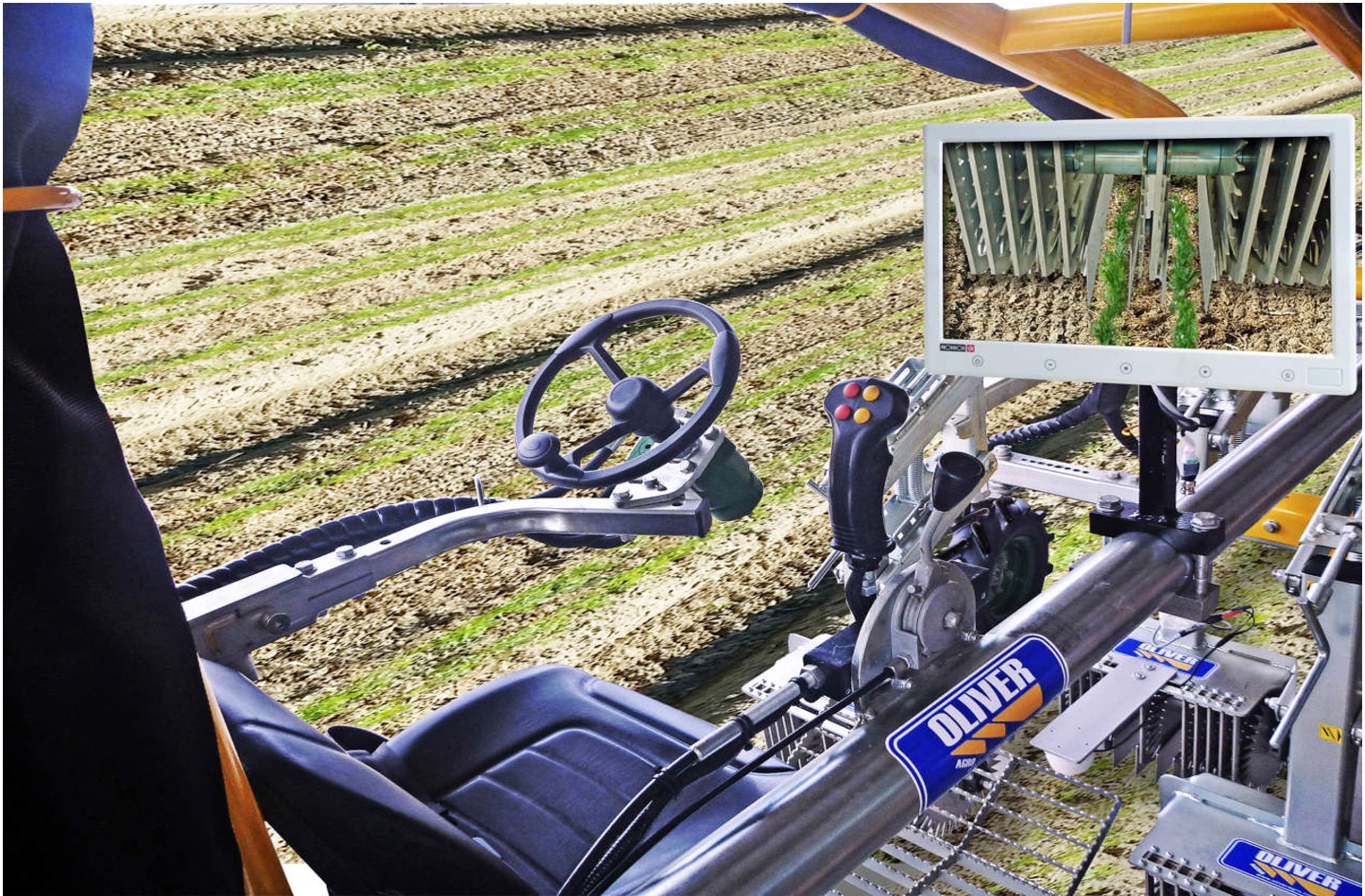
Description
This approach combines various mechanical weed control methods with the use of sensors for precision farming applications.
Explanation
It enables direct and accurate weed control, improving efficiency and reducing the need for chemical inputs.
Advantages
Localized mechanical control ensures high effectiveness, particularly on small-sized weeds.
Improves resource use efficiency and can reduce reliance on manual labor by partially replacing the workforce.
Significant advancements have been made in recent years, particularly with the development of optical guidance systems and control hoes, which enhance precision and usability.
Reduces environmental impact by eliminating the need for chemical herbicides, contributing to more sustainable farming practices.
Drawbacks
Adverse weather conditions can limit the intervention window. Effectiveness is reduced on sloped soils.
Best suited to small-scale farms. The technique involves high investment costs, is time-consuming, and requires advanced technical skills for operation.
There are limitations in applying this method to extensive arable crops; it is generally suitable only for row crops.
High energy demands contribute to increased greenhouse gas emissions, offsetting some environmental gains from herbicide reduction.
Technical Aspects
Technical readiness
There are concerns regarding the immediate applicability of this solution due to high investment costs and the advanced skill set required. To make mechanical weeding with precision agriculture sensors more accessible, it is essential to provide targeted training and technical support to ensure effective implementation. Financial assistance (such as subsidies for machinery purchases) can help offset initial costs. The availability of machines with fast processing times is also critical for success, especially for time-sensitive operations.
Ease and efficiency of implementation
Farmers face several challenges, including the risk of not recovering their investment and the complexity of operating advanced machinery, particularly for older or less technologically experienced farmers. Moreover, the technology is limited in its applicability to specific crops and terrains, which can restrict broader use.
Need for training and education
Clear instructional materials are needed to support the use of sensor-integrated machinery. These should be complemented by practical demonstrations featuring multiple types of equipment tested across different crops and soil types. Comprehensive training programs are essential to ensure that operators are fully prepared for effective implementation.
Need for investments
Farmers must invest in specialized machinery that is often not already present on the farm. Additionally, they must ensure their equipment is compatible with or can be adapted to integrate precision farming sensors.
Policy Recommendations
Subsidies and co-financing mechanisms are essential to support the purchase of agricultural machinery, including automatic guidance systems. Field demonstrations should be promoted to showcase the benefits and practical applications of these technologies.
Training programs must be made widely available to help farmers make informed decisions and use machinery effectively. Finally, cooperation initiatives - such as equipment sharing and experience exchange among farmers - can improve cost-efficiency and foster collective knowledge-building.
Economic Analysis
From an economic standpoint, the system delivers notable cost savings. Reductions in labor and fuel use significantly contribute to overall financial benefits. Additionally, decreased CO₂ emissions enhance both environmental and economic outcomes. These factors highlight the system’s improved operational efficiency and resource optimization, driven by the integration of precision technology into organic farming practices.
Social Analysis
A traffic light score of 55.26% reflects a moderate social impact of mechanical weeding technology integrated with precision tools. While the system improves labor conditions, broader social adoption is hindered by high upfront investment and operational costs. This moderate score suggests that, without targeted financial support or policy incentives, the social benefits will remain limited—particularly for small-scale farms.
Social Analysis Percentage
55.26
Social Analysis Color
yellow
Environmental Analysis
With a traffic light score of 55.27%, the environmental impact of precision mechanical weeding is also considered moderate. The technology provides environmental advantages such as water conservation and reduced soil erosion. However, these are counterbalanced by challenges like elevated greenhouse gas emissions and dependency on external inputs, which limit its overall environmental performance.
Environmental Analysis Percentage
55.27
Environmental Analysis Color
yellow