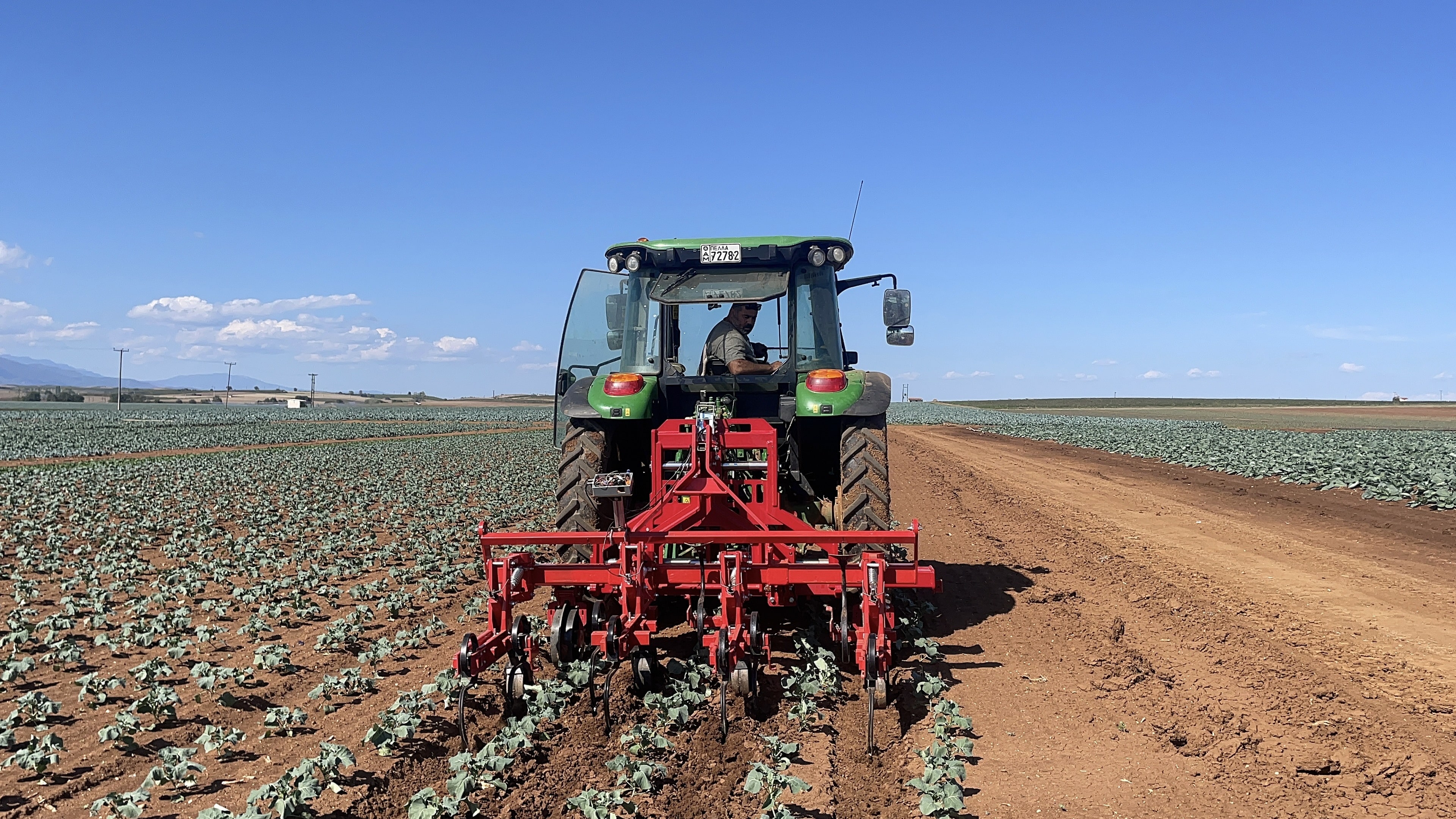
Description
Mechanical weeding refers to the use of mechanical methods to control and reduce the spread of weeds in fields without the use of chemicals. This can include the use of machinery and specialized tools to remove or uproot weeds, aiming for effective weed management.
Explanation
It effectively controls weeds without relying on chemicals, reducing environmental impact and promoting sustainable farming practices. It also helps improve soil health by minimizing chemical residues and preserving biodiversity.
Advantages
This solution reduces the need for chemical herbicides, leading to long-term cost savings and increased efficiency in weed management.
By reducing reliance on chemicals, it enhances farm profitability and appeals to consumers demanding organic produce, promoting economic growth in the sector.
It is relatively easy to implement with proper equipment, though its effectiveness increases with complementary practices like mulching and cover cropping.
It promotes sustainable farming by minimizing chemical use, thereby reducing soil and water contamination, and enhancing biodiversity.
Drawbacks
It may not always be as fast or thorough as chemical alternatives, requiring additional labour and equipment.
The initial investment in machinery and ongoing maintenance costs can be high, particularly for smaller farms.
Challenges such as equipment wear, potential crop damage, and managing soil compaction need careful consideration and may require additional labour and planning.
Improper timing or excessive mechanical weeding can lead to soil compaction or damage to the crop, potentially impacting soil health and yield.
Technical Aspects
- Technical readiness: Mechanical control solutions for horticulture are currently available on the market, with varying levels of global and local availability. These solutions are suitable for immediate application on farms, providing a readily accessible option for farmers in the short term.
- Ease and efficiency of implementation: The implementation of mechanical weed control is generally easy to integrate into farming systems, particularly when proper equipment and techniques are in place. However, there are challenges such as equipment wear, risk of crop damage, and the need to manage soil compaction and weather conditions. These concerns can be mitigated through improved machinery, strategic application timing, and incorporating complementary actions like mulching and cover cropping.
- Need for training and education: Successful implementation of mechanical weed control requires training in equipment operation, timing, and integration with other practices. It is crucial for farmers to understand how to calibrate machinery, adjust for soil conditions, and implement integrated weed management systems. Proper training will ensure the solution is used efficiently and effectively across different contexts.
- Need for investments: The initial investment for mechanical weed control involves purchasing specialized machinery, maintenance tools, fuel, and consumables. While the cost can be high, the long-term economic and environmental benefits, such as reduced herbicide use and improved soil health, make this solution a worthwhile investment over time.
Policy Recommendations
To further promote mechanical control in horticulture, policy instruments such as subsidies for machinery purchase, co-funding for investment, and training programs are necessary. Demonstration activities and farmer cooperation initiatives are also recommended to facilitate wider adoption of the technology.
Economic Analysis
The economic analysis highlights the financial challenges associated with project implementation, emphasizing the importance of broad adoption to improve cost-effectiveness. While some financial returns are observed, they remain insufficient to fully offset the investment and operational expenses. The benefit-cost ratio indicates that the generated benefits do not yet outweigh the costs, and reinvestment requirements further impact long-term financial performance. Achieving wider adoption is essential to distribute costs more efficiently and enhance economic viability. Additionally, beyond financial considerations, the project’s environmental contributions, such as improved soil health and resource efficiency, provide long-term value that supports its overall sustainability.
Social Analysis
The traffic light score of 62.10% indicates a moderate overall social impact of the camera-guided mechanical weeding technology. This score reflects that, while technology has certain benefits, particularly in improving labor conditions and increasing flexibility in agricultural management, there are limitations that prevent its broader social impact. The high initial investment and operational costs are significant barriers, particularly for smaller farms, limiting the technology's accessibility. The score suggests that, while some social benefits exist, these remain constrained without additional financial support or policy interventions.
Social Analysis Percentage
62.10
Social Analysis Color
yellow
Environmental Analysis
The traffic light score of 58.74% indicates a moderate overall environmental impact of the camera-guided mechanical weeding technology. This score suggests that while technology provides some environmental benefits, such as reducing external inputs and supporting biodiversity, it faces significant challenges in areas like fuel consumption and greenhouse gas emissions, which limit its broader environmental effectiveness.
Environmental Analysis Percentage
58.74
Environmental Analysis Color
yellow