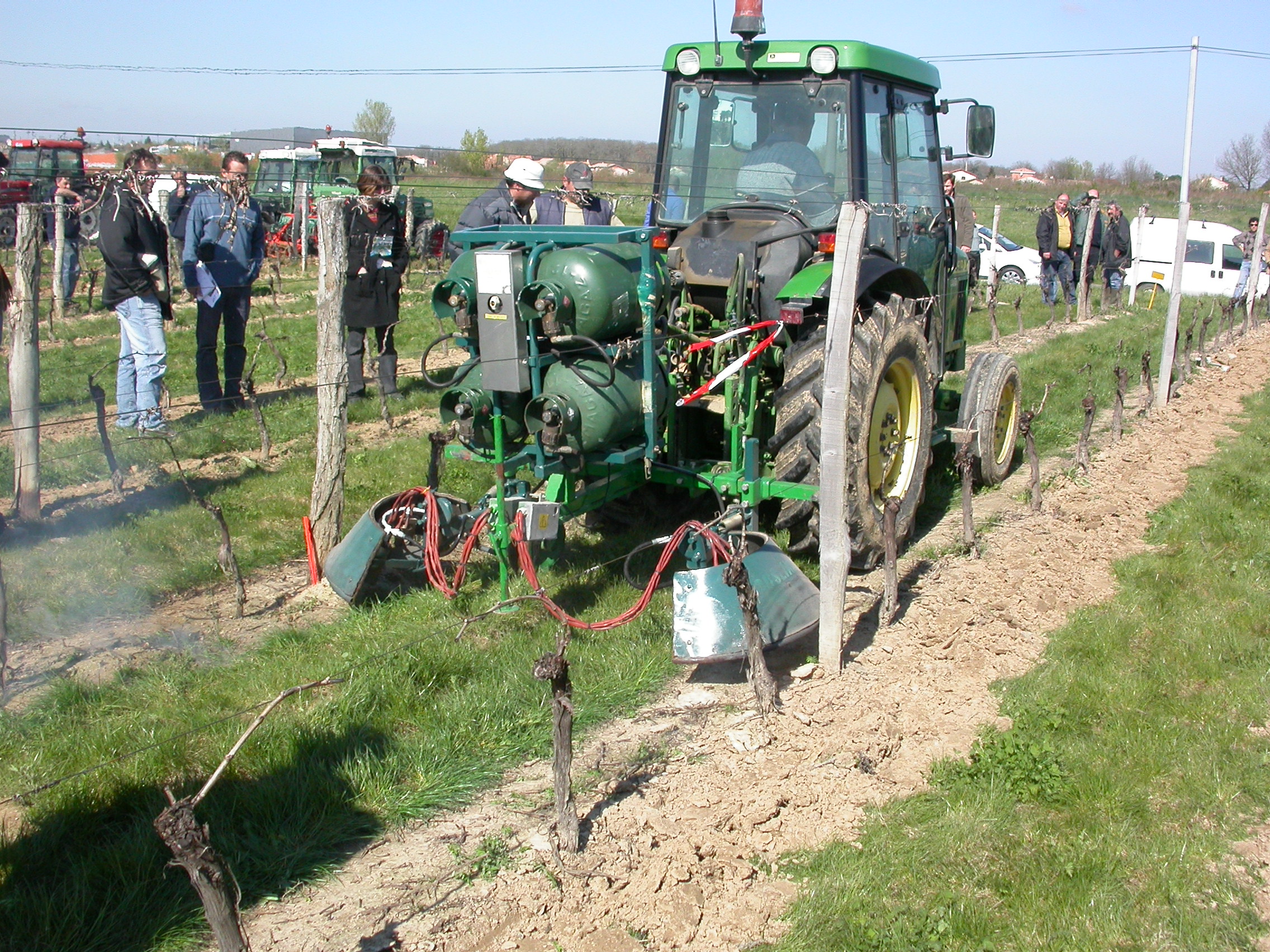
Description
Thermal weeding involves destroying the cells of early-stage weeds using various heat sources, such as hot foam, infrared radiation, or open flame.
Advantages
Thermal weeding is effective on the aerial parts of weeds and poses no risk of wounding vine trunks.
The method is well-suited for use on thin soils or steep vineyards, where mechanical weeding could increase erosion risk. It is also effective in wet soil conditions, where more vapor is produced and contributes to weed control.
This solution is herbicide-free and does not involve mechanical soil disruption, avoiding the negative effects of ploughing.
Drawbacks
Thermal weeding has a slow working speed and requires 5 to 8 passes per year. It is only effective on the above-ground parts of weeds and does not impact the roots, which can lead to regrowth.
The method is expensive to operate and is generally better suited to high-value vineyards where the cost can be justified.
There is a risk of damaging vineyard infrastructure, particularly plastic irrigation pipes. The system also has limited compatibility with other tools, reducing operational flexibility.
Thermal weeding involves high energy consumption and can pose a fire risk in dry regions with low rainfall.
Technical Aspects
Technical readiness
Thermal weeding equipment is commercially available worldwide and is particularly well suited to complex terrains. It performs especially well in wet soil conditions, where increased vapor enhances its efficacy.
Ease and efficiency of implementation
While thermal weeding can be implemented effectively, it requires proper planning and multiple annual passes to maintain weed control. The process is slower than mechanical alternatives and must be carefully scheduled to avoid weather-related inefficiencies and fire risks.
Need for training and education
Operators must be trained to manage machine settings, safety protocols, and environmental risks—particularly in dry regions. Equipment providers should offer comprehensive training to ensure safe and effective use.
Need for investments
A dedicated thermal weeding machine typically costs around €15,000. Additional operating costs include significant propane use—approximately 40 kg per pass—making recurring fuel expenses a key consideration.
Policy Recommendations
To encourage broader adoption of thermal weeding, financial support is essential—particularly in the form of subsidies to help offset equipment costs. Providing targeted training is also necessary to ensure safe, efficient use and to mitigate risks such as fire hazards and equipment damage.
In addition, demonstration activities and on-farm trials would increase awareness and farmer confidence in this alternative method, supporting its integration into sustainable vineyard management strategies.