Description
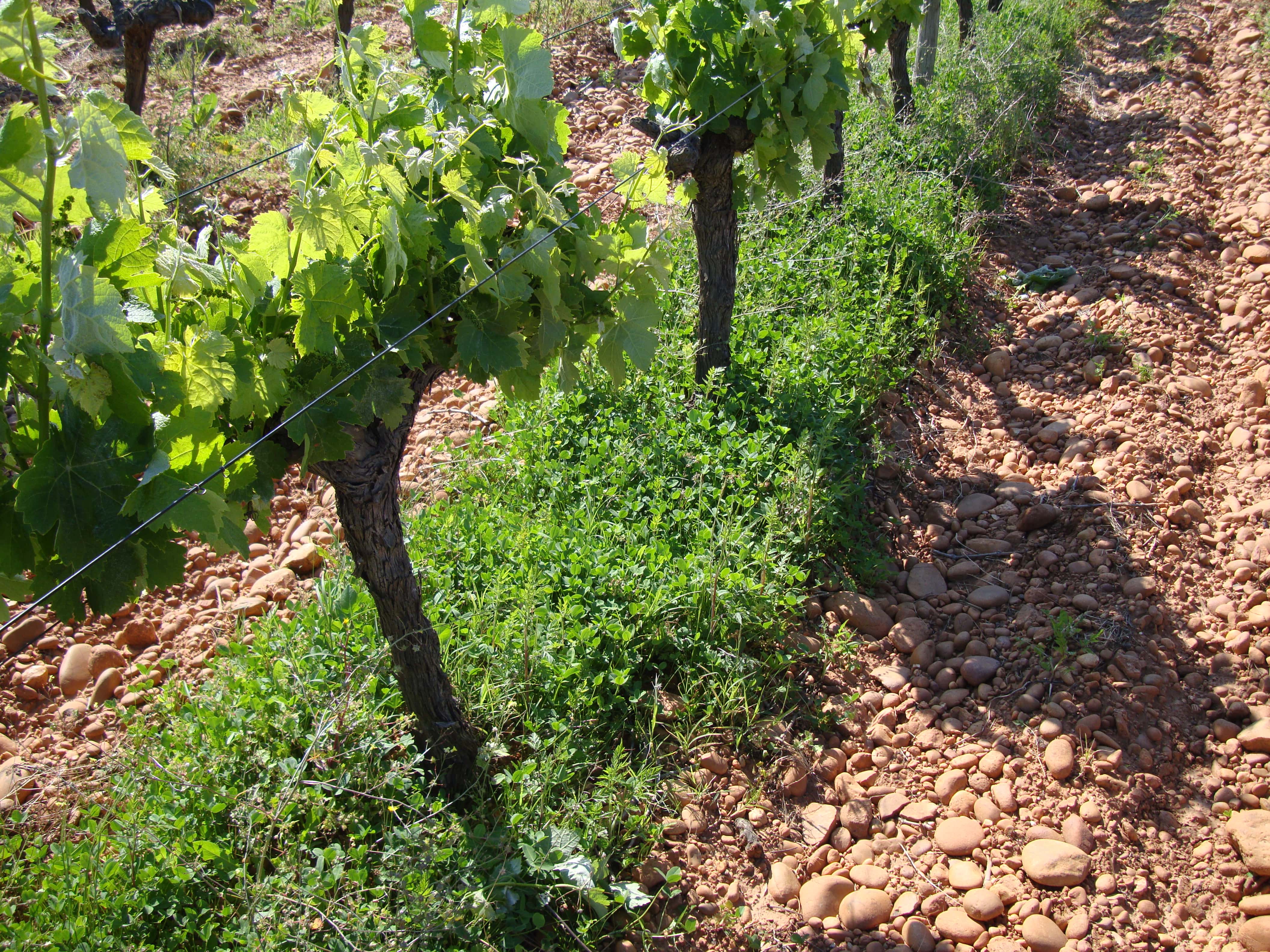
Cover crops, such as grasses or legumes, are sown under the vine row—between and around the vine trunks—to provide soil cover and suppress weed growth. These crops are maintained for several years and may be mown periodically throughout the growing season. After a few years, reseeding is required to maintain effective coverage and benefits.
Explanation
In addition to effective weed suppression, cover crops contribute to increased soil organic matter and enhance biodiversity, making them a valuable component of sustainable vineyard management.
Advantages
Cover crops provide effective soil coverage, which helps prevent weed growth under the vine row.
This solution is adaptable to a wide range of farm contexts, including sloped terrain, small-scale, and large-scale operations. It is particularly well-suited for vigorous plots or those with low to medium yield objectives.
The method is herbicide-free and supports sustainable soil management by increasing organic matter, maintaining ground cover to reduce erosion, and enhancing on-site biodiversity.
Drawbacks
Cover crops may lead to reduced vine vigour and crop yield, depending on soil conditions and vineyard management objectives.
This practice is not well suited to thin soils or vineyards with high yield objectives. Currently, there are no commercially available seeders specifically designed for under-vine sowing, meaning growers often rely on custom-built or adapted spreading tools. In addition, specific equipment is required for mowing, and the choice of cover crop species must be carefully matched to the soil, climate conditions, and desired vineyard outcomes.
Technical Aspects
Technical readiness
The solution is functional but must be adapted to local conditions, including soil type, climate, and vineyard objectives. Its effectiveness depends on proper species selection and site-specific management practices.
Ease and efficiency of implementation
Implementation is hindered by the lack of commercially available seeders designed specifically for under-vine areas. However, alternative approaches—such as adapted or self-built seeding tools—can make implementation feasible. Despite its potential, adoption remains limited, as establishing cover crops under the vine row is often perceived as more complex than sowing between rows.
Need for training and education
Peer-to-peer learning is valuable for sharing practical knowledge about species selection and management. Workshops can also help farmers develop custom seeders by modifying existing equipment, encouraging broader adoption through practical innovation.
Need for investments
To manage under-vine cover crops, growers need access to a mower and a suitable seeder. Additional tools for soil preparation may also be required prior to seeding, which can increase initial investment needs.
Policy Recommendations
Research and development are needed to advance the design of under-vine seeders and mowers, as well as to improve the selection of suitable cover crop species for various vineyard conditions. Public or private funding to support these innovations would help address current technical barriers.
In addition, financial support for the purchase of essential equipment- such as seeders, mowers, and soil preparation tools- would reduce the entry cost for farmers and encourage broader adoption of under-vine cover cropping practices.