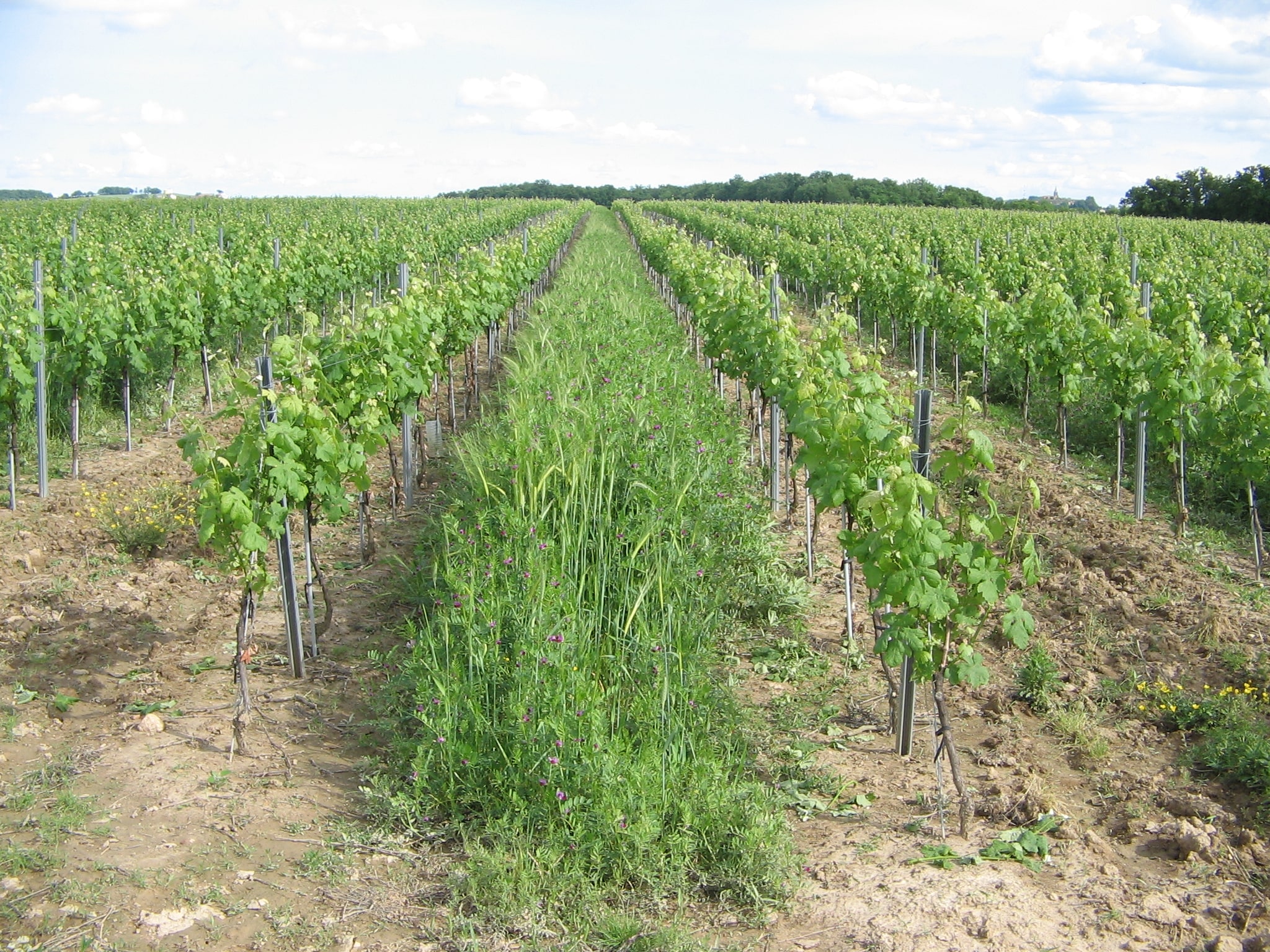
Description
Green manure between the vine rows involves sowing one or more plant species that cover the soil during the fall and winter. This practice provides multiple benefits for the soil and the crop, including weed suppression. Commonly used species include legumes, grasses (Poaceae), and Brassicaceae.
Explanation
This solution offers several advantages: it ensures soil coverage to limit weed growth, contributes nutrients (e.g., nitrogen from legumes), enhances soil organic matter, and supports biodiversity.
Advantages
When legumes are included, this solution contributes nitrogen to the soil, benefiting the vine. Other species can provide additional nutrients. It also reduces weed infestation, provided there is a good germination rate and appropriate seeding density.
The solution has few operational constraints and is adaptable to various vineyard contexts. Its flexibility makes it suitable for a wide range of management systems.
It ensures soil coverage during winter, contributes organic matter, enhances biodiversity, and supports better water quality by reducing runoff and nutrient leaching.
Drawbacks
This solution does not control weed growth during the vine’s active growth period in spring and summer.
It requires specific field operations, including seedbed preparation, sowing, and later destruction of the green manure crop, which can increase labor and equipment needs.
An inter-row seeder is required, and timing is critical—quick response is needed to sow at the right moment. Germination success is highly dependent on soil and climate conditions, and may be challenging in thin soils or dry climates.
No significant environmental issues are associated with this practice.
Technical Aspects
Technical readiness
Tools for seedbed preparation, sowing, and terminating green manure are commercially available and accessible to most winegrowers.
Ease and efficiency of implementation
The solution is relatively easy to implement, but its effectiveness can vary depending on soil and climate conditions, which influence germination and coverage rates. Additionally, green manure is not a year-round weed control method, as it does not manage weed growth during the vine’s active growing season.
Need for training and education
While no formal training is required, local peer-to-peer learning is highly valuable. It enables farmers to choose the most suitable seed mixtures based on their vineyard’s specific soil and climatic conditions.
Need for investments
Implementation requires the purchase or access to an inter-row seeder and green manure seeds, which may represent a modest investment depending on the scale of use.
Policy Recommendations
Further research and development focused on green manure seed varieties would help expand the range of options available to growers, especially species suited to different soil types and climate conditions.
Subsidies and financial incentives for environmentally friendly farming practices would support farmers in adopting green manure strategies, especially in areas facing water scarcity or soil degradation. These measures could accelerate uptake and reinforce the role of cover cropping in sustainable vineyard management.