Description
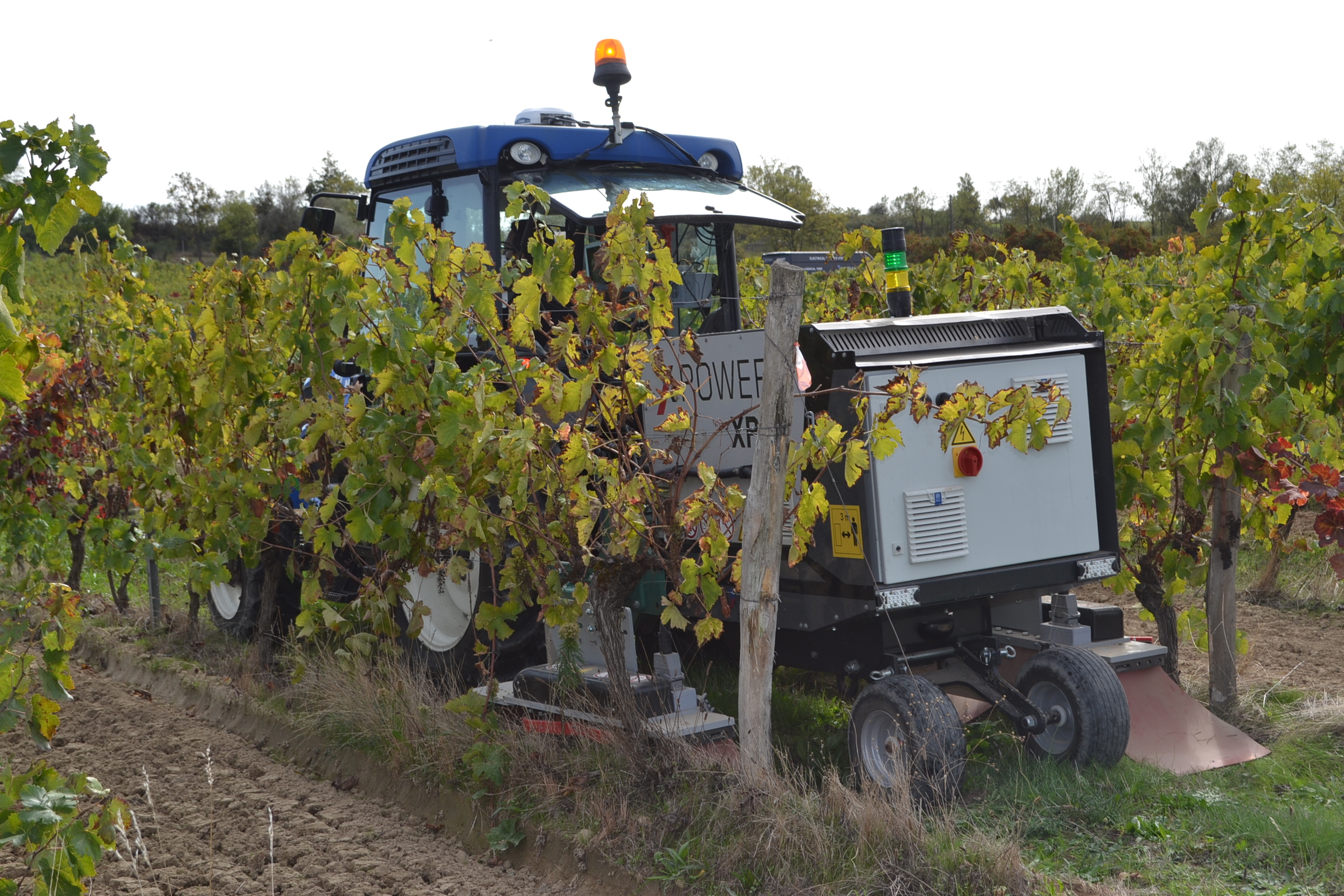
A tractor-mounted generator produces an electric current, which is conducted through the superficial soil and into the weeds via electrodes. The electrical current destroys the weed cells, causing the plants to begin dying within a few hours. This method is applied under the vine row, directly along the vine trunks.
Advantages
This method is effective, particularly on levelled soils and when applied during the early growth stages of weeds.
It is well adapted to a variety of soil types, including complex and stony soils, where mechanical methods may be less effective. Its versatility makes it suitable for farms facing technical constraints related to soil conditions.
The solution does not disturb the soil and avoids any risk of water or soil contamination, making it a clean and non-invasive approach to under-vine weed management.
Drawbacks
To achieve effective results, specific conditions must be met, such as weed growth stage and soil contact. The working speed is relatively low, which can reduce operational efficiency on larger plots.
The equipment involves a high purchase cost and significant energy consumption, which may limit its economic feasibility for some farms.
There is a risk of electrocution, so strict safety protocols must be followed. The method is not suitable for sloped terrain and performs best on flat ground. Additionally, it may not be compatible with certain irrigation systems, depending on their layout and materials.
Technical Aspects
Technical readiness
This solution is already available in some local markets. However, improvements are still needed to increase its efficiency, for example by reducing tool weight, lowering energy consumption and increasing work speed. These developments would help reduce operating costs and make the technology more accessible.
Ease and efficiency of implementation
The solution is well suited to leveled soils and is most effective when targeting early stage weeds. Early passes or alternation with brush tools can improve overall results. Treating weeds at a limited stage of development also helps reduce fire risks that can occur when working over thick, dry weed residue.
Need for training and education
Training is essential for safety reasons due to the nature of the equipment. Awareness raising and demonstration of best practices are also important to increase adoption and acceptance by farmers.
Need for investments
Investment needs The purchase cost is high - around €110,000 - which can be a barrier to adoption. However, no additional investment in equipment is required to implement this solution.
Policy Recommendations
Subsidies could help reduce the purchase cost, making the solution more accessible to winegrowers. Encouraging shared ownership or cooperative use of the equipment among several farmers would also contribute to lowering individual investment costs. In addition, on-farm demonstrations and training sessions could improve the perception of this tool, build farmer confidence, and promote the adoption of best practices.