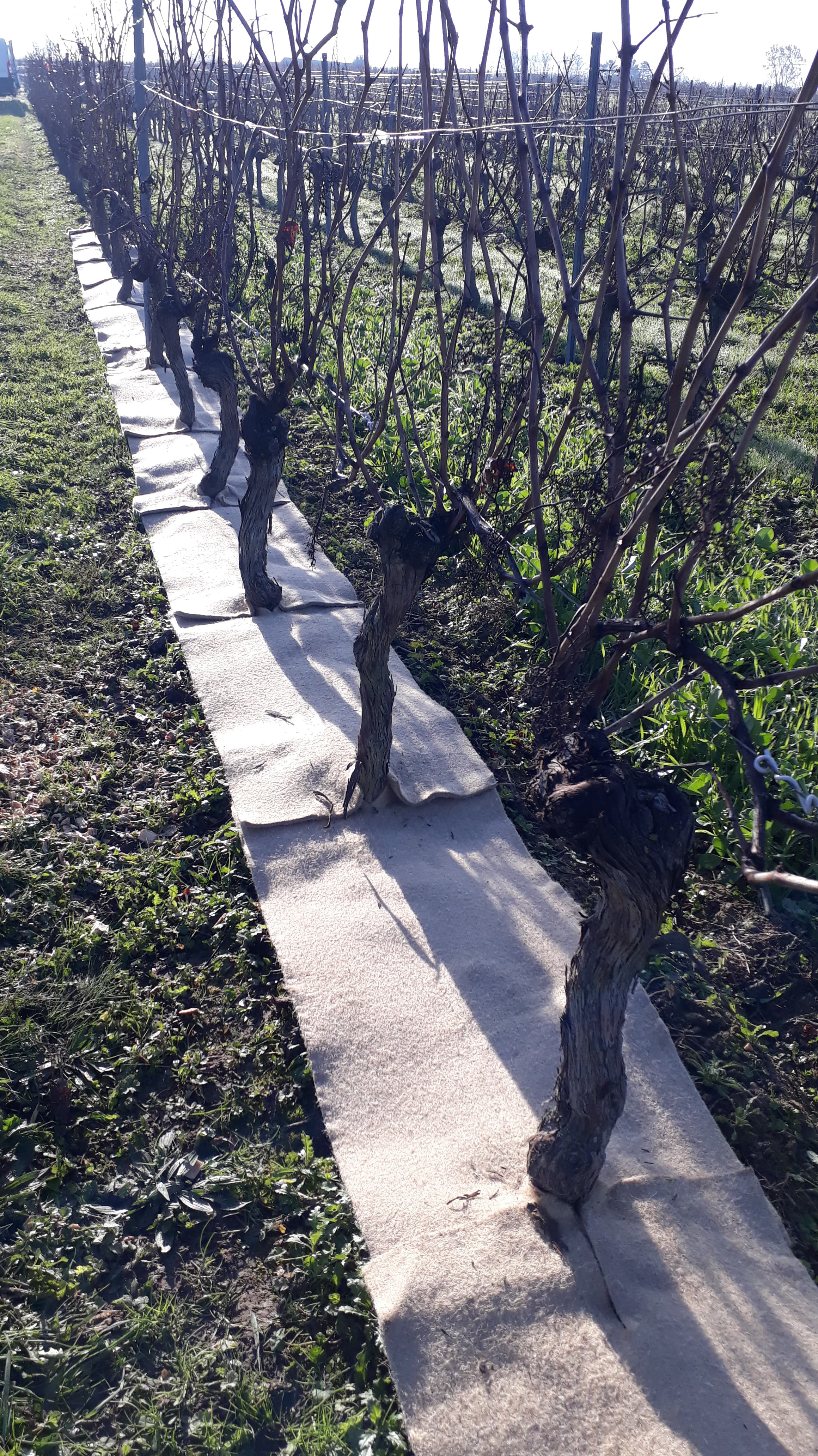
Description
The area under the vine row can be covered with raw organic matter such as wood chips, straw, or green waste compost. This ground cover prevents weed growth and can remain effective for several years, requiring little to no additional intervention (such as herbicide or mechanical weeding before installation, occasional hand weeding, or the addition of new material).
Advantages
This method offers medium to high efficacy depending on the type of mulch material used. In most cases, it requires only one application, with no further intervention needed for one to several years- though green waste tends to decompose faster and may require yearly replenishment. The lifespan of the mulch depends on the specific material used.
Green waste materials can often be locally sourced at low or no cost, making them an economically attractive option for some growers.
This solution is well suited for farms with soil conditions that make mechanical weeding difficult. In the case of green waste compost, it also benefits vineyards that need to improve soil organic matter levels.
Mulched soil tends to retain more moisture and remains more stable in terms of temperature variation. It also supports healthy soil biodiversity and, in some cases, increases soil organic matter, contributing to long-term soil health.
Drawbacks
The effectiveness of the mulch can be reduced by climatic and local conditions, such as humidity, which may accelerate decomposition and shorten its lifespan. Once the mulch breaks down, weed growth can resume. Persistent weeds may also remain an issue.
Implementation is costly due to the time-consuming nature of the task—existing spreaders operate at low speed. Most mulch materials, aside from green waste, are expensive and significantly increase overall costs. Additionally, raw materials are often available only locally, which can drive up prices due to limited availability and high transportation costs.
There are few tools specifically designed for spreading mulch, which can make application labor-intensive. Furthermore, inter-row tillage tools may accidentally damage the under-vine mulch.
The use of herbicide may still be necessary during site preparation, potentially reducing the environmental benefits of the practice.
Technical Aspects
Technical readiness
For raw organic materials, this solution still requires development—particularly in terms of spreading equipment to reduce implementation time and costs. Additionally, increasing the number of mulch suppliers would help make raw materials more competitively priced.
Ease and efficiency of implementation
Spreading raw material takes considerable time due to the slow operating speed of existing equipment. However, it can still be done mechanically using a spreader, though such tools are not widely available. Adapting existing tools may offer a viable solution. Once implemented, the practice is effective and typically requires little to no further intervention for several years.
Need for training and education
No formal training is needed, but peer-to-peer knowledge exchange is valuable. Farmers can benefit from shared feedback when selecting appropriate raw materials for their specific soil and climate conditions. Proper implementation—such as applying sufficient mulch thickness and adjusting tool width for inter-row spacing—is essential for success.
Need for investments
Costs vary significantly depending on the type of raw material used. Green waste can often be sourced locally, with transportation being the main cost. In contrast, materials like miscanthus straw are less common and may need to be sourced from other regions, leading to high transportation costs due to the volume required.
Policy Recommendations
This solution requires further development to expand the range of available raw materials, which will depend on establishing dedicated supply chains. Lowering material costs is also essential. Similarly, there are currently limited options for suitable spreading equipment, which need to be improved and diversified. Local trials and demonstration activities would help farmers gain practical knowledge and build confidence in adopting this solution.